Services
Condo Management Phuket
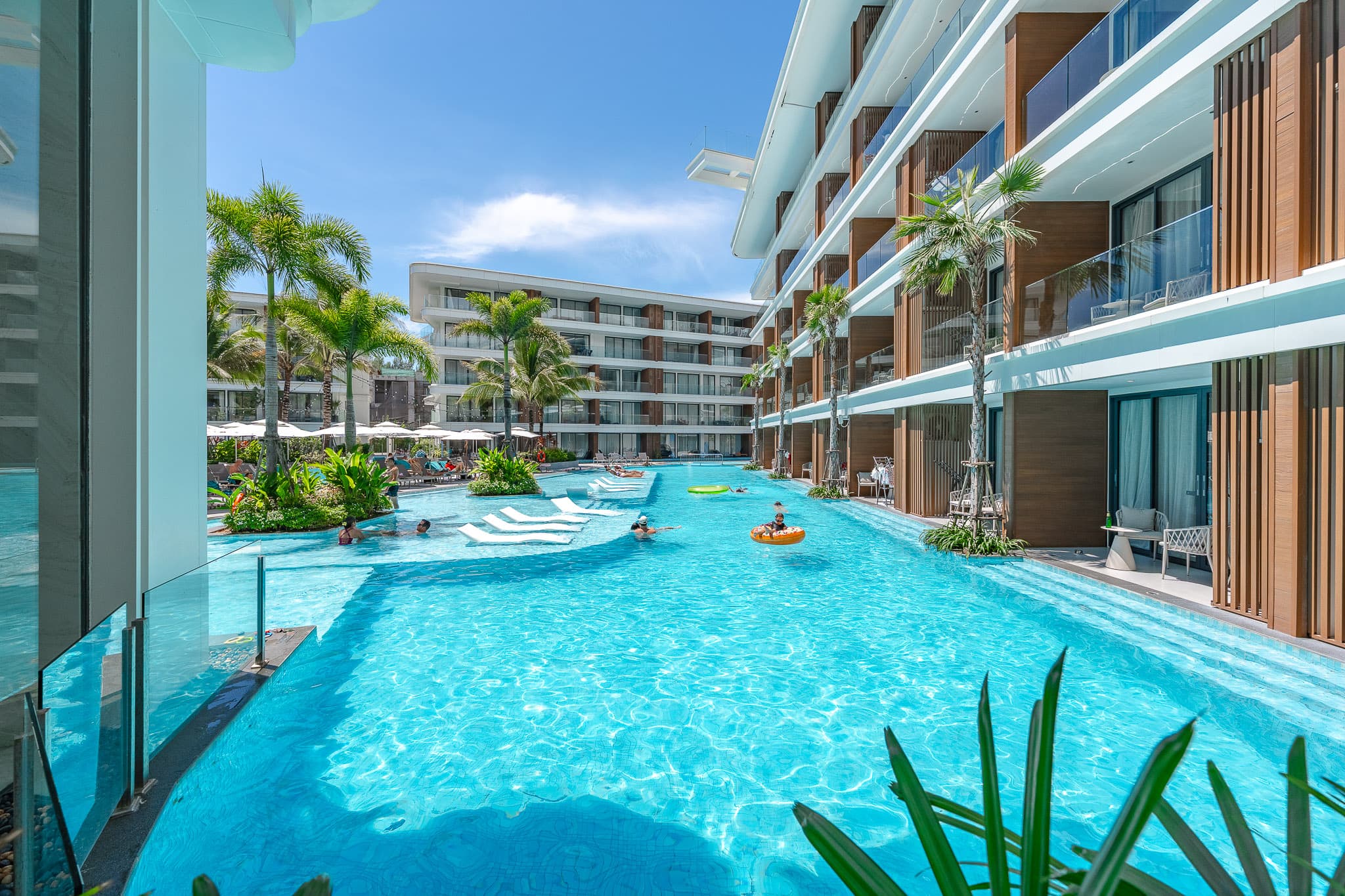
Owning a condo in Phuket can be a rewarding investment, but it also comes with unique responsibilities, from upkeep and guest communication to financial tracking. Our condo management services in Phuket are designed to handle every aspect of your property, working to keep occupancy rates high and rental income consistent, and a stress-free experience for owners. We combine local market knowledge with proven strategies to attract the right tenants, provide top-tier maintenance, and keep your condo in excellent condition. With our dedicated support and transparent reporting, you can enjoy peace of mind while maximizing the potential of your Phuket condo.
Professional Condo Management in Phuket

Solutions for Hassle-Free Condo Ownership
Comprehensive Maintenance & Housekeeping
Regular inspections, professional cleaning, and prompt repairs keep your condo looking its best. Our proactive approach helps prevent costly issues, ensuring a comfortable stay for guests and a worry-free experience for owners
Guest Screening & Management
We carefully vet potential renters and handle all guest interactions, from check-in to check-out, making sure your property is occupied by responsible tenants. Our 24/7 support also guarantees a seamless experience for everyone involved.
Transparent Financial Reporting
Stay informed about your condo’s performance with clear, detailed financial statements. We track rental income, expenses, and occupancy rates, giving you full visibility into how your investment is doing in the Phuket market.
Targeted Marketing & Rental Optimization
Our local expertise helps us craft effective listing strategies and dynamic pricing models. By showcasing your condo’s best features on high-traffic platforms, we attract quality guests and maintain steady bookings year-round.
Our Commitment to Excellence
Why Our Property Management Services Stand Out
We believe that owning property in Phuket should be both rewarding and worry-free. By combining local expertise with innovative, data-driven strategies, our team delivers personalized support and consistent results. Whether you’re managing a villa or a condo, we tailor our approach to increase rental income, maintain impeccable standards, and keep you fully informed through transparent reporting. Discover how our hands-on methods and professional oversight can transform your investment into a truly effortless experience.
Personalized Approach
We assess your property’s unique features and rental objectives, then craft a strategy to boost occupancy and guest satisfaction. Our customized approach ensures every villa or condo in Phuket receives the focused care it deserves
Proactive Maintenance
Regular inspections and swift repairs keep your property in prime condition. By preventing minor issues from escalating, we protect your investment, maintain its value, and foster a comfortable experience for guests.
Transparent Reporting
Stay informed with detailed financial and occupancy reports. Our transparent updates help you make confident decisions and understand how our property management services drive consistent returns
Innovative Strategies
Elevating Condo Management with Technology and Sustainability
At our condo management company in Phuket, we constantly seek fresh approaches to set your property apart. By integrating advanced technology, sustainable practices, and local market insights, we ensure your condo remains competitive and profitable. Our innovative methods streamline operations, boost energy efficiency, and maximize rental returns, all while keeping you fully informed about your property’s performance.

Smart Technology Integration
We harness the power of modern property management software and smart home systems to monitor your condo’s performance in real time, ensuring efficient operations and a superior guest experience.
Eco-Friendly & Sustainable Practices
Our solutions include green initiatives like energy-efficient lighting and waste reduction programs, reducing costs and appealing to eco-conscious renters in Phuket.
Local Market Expertise
Leveraging deep local insights and data-driven analytics, we create tailored marketing strategies that attract quality tenants and boost your condo’s occupancy in the competitive Phuket market
How it works
The building gets read before the unit does.
A condo is two decisions, not one: what the law allows, and what your co-owners allow. We settle both before anything is listed.
- 1
We read the regulations
The registered rules, the house rules beneath them, and the juristic person's written position on letting. Pattama asks in Thai, at the desk, and we come back with an answer rather than an impression.
- 2
We see the unit
Condensate lines, the coil above the ceiling grille, the meters, the state of the soft furnishings. A sealed unit fails differently from a villa, and quietly.
- 3
You get a written quote
Per unit, after the visit, with the base and the exclusions spelled out. Our fee starts at 10 percent, and what sits above depends on how much the building already does for you.
- 4
We take it on, and we file
Keycards registered, contractors cleared with the building, TM30 filed for every foreign occupant, and a dated inspection report with photographs from the same angles each visit.
Where condos go wrong
A condo can be perfectly legal to own and still illegal to let.
Most of the trouble we see in Phuket condos starts before a single guest arrives. It starts in the building's rules, in the licensing, and in the paperwork nobody read.
The juristic person outranks you
Every Phuket condominium has a juristic person, the legal body of the co-owners, with registered regulations and house rules beneath them. Those rules can ban short lets outright, cap the number of keycards, restrict lift access, or require every occupant to register at the desk. They sit above anything a manager can offer you, and they can change at a general meeting you did not attend. The current regulations are the first document we ask to read.
Two gates, and both have to be open
Thai hotel law treats stays of fewer than thirty nights as hotel business, and residential condominiums are rarely licensed for it. Your building's rules are a second gate, separate from the law, and they can shut whatever the law allows. So there are two gates, and both have to be open. We tell you which one closes on your unit before anything is listed, and if both are shut we say so and decline, rather than let quietly and hope nobody checks.
TM30 is not optional, and it is yours
When a foreign national stays in your unit, the TM30 notification falls on the owner or possessor of the property, not on the guest. It applies to a friend staying for free just as much as to a paying guest. Some juristic offices file for residents as a courtesy, many do not, and a courtesy is not a transfer of duty. It is a small administrative act that becomes a real problem only when it has never been done and somebody asks.
Common charges do not pause
Common area charges and the sinking fund are billed against the unit, not against use, so they run whether it is occupied, empty or being renovated. A building can vote a special levy for a lift, a roof or a facade with limited notice. Arrears follow the unit rather than the person who ran them up, so an unpaid balance can cost you an access card or hold up a transfer at the Land Office. Ask the juristic office for the last annual accounts and the state of the reserve before you plan anything around the unit.
What the building already does, and what it never will
Reception takes deliveries, security walks the corridors, and the juristic staff keep the lifts, the common pool and the grounds. You already pay for that through the common charges, and a manager who bills you again for it is padding. What the building will not do is open your front door, run your air conditioning, meet a guest at midnight, chase a leak into the unit below, or tell you afterwards what any of it cost. That boundary goes into the agreement before we start.
A closed unit turns against itself
No garden and no private pool removes half the work of a villa. It does not remove damp. A sealed unit through the wet season grows mould in wardrobes and soft furnishings, dries out the drain traps until the smell comes back up, and corrodes the coils above the ceiling grille. A blocked condensate line on a high floor does not stain your ceiling: it stains the ceiling of the owner below you, and that is a conversation with a neighbour and the juristic office as much as it is a repair.
What we actually do
We manage the risk first, then the unit.
Our condo work is deliberately unglamorous. It is checks, records, and a named person on the island who answers when the building calls.
We read the building before we take the unit
Before agreeing to anything we ask for the current regulations, the juristic person's written position on letting, and the licensing status of the building. We read them, then we tell you what we found. Sometimes the honest answer is that the unit suits a monthly or yearly let. Sometimes it is that it should not be let at all. That conversation is better had before you commission photographs than after.
If the rules say no, we do not find a way round
We will not list at a longer minimum and quietly accept shorter bookings, and we will not coach guests to tell the desk they are friends of the owner. Enforcement in Phuket is uneven, which is precisely why the practice persists, and it usually arrives after a resident complains or the committee changes. When it does, the owner is named, not the manager who took the booking. We would rather decline a property than run it that way, and you should ask every manager you speak to the same question.
Long lets, and units nobody lets at all
A tenant on a yearly lease still needs a proper handover, a dated inventory, a deposit handled correctly, the air conditioning serviced, and somebody who answers when the water heater fails on a Sunday. Other owners never let, and only want the place checked, aired and reported on. Both are real briefs and we take them as they are. Be honest with yourself on the second one: if you visit every few weeks, the juristic team is attentive and a neighbour holds a key, you may not need us at all.
The desk, the manager and the AGM, in Thai
Pattama deals with the juristic office, the building manager and the security desk directly. That covers keycard registration, guest access, works permits for any contractor entering the building, and the notices that arrive in Thai and get filed unread by owners abroad. Silvain has been on Phuket since 2019 and Pattama is Thai, ten years of experience on this island between the two of us, so nothing is lost between the two sides of the conversation. We do not vote your unit at a co-owners' meeting: that right stays with you, and we tell you when a meeting is worth your attention.
Inspections while the unit is empty
Empty is the risky state, not occupied. We run each indoor unit long enough to watch the condensate actually drain away, flush the traps, look behind the wardrobe backs, read the meters so a cistern passing quietly shows up as a number that keeps climbing rather than as a bill, and check the ceiling for the first mark of a leak from above. Photographs are taken from the same angles each visit, so change is visible instead of debated. A setting nobody verifies is a hope, not a measure.
Records that stay yours
TM30 filings kept with the property file, dated inspection reports, service history for the air conditioning, and damage photographed on arrival and departure and logged the same day rather than described a week later. Condo damage is usually small and disputed, a scorched worktop or water that went through to the floor below, so evidence recorded at the time is what settles it. Where the building holds us responsible, we tell you straight away. If you leave us, the file goes with you.

Straight answers
The questions condo owners actually ask us.
These come up in almost every first conversation. The answers are the ones we give on the phone, including the places where the answer is no.
Can I put my condo on Airbnb?
Can you get my unit licensed so that short stays are legal?
My unit has been empty for eight months. Is that a problem?
Who is responsible for the TM30 declaration, me or the tenant?
Do you handle the CAM fees and the sinking fund?
I may sell in a few years. Does the way it is managed change anything then?
FAQ
Questions owners ask
Can I put my condo on Airbnb?
Can you get my unit licensed so that short stays are legal?
My unit has been empty for eight months. Is that a problem?
Who is responsible for the TM30 declaration, me or the tenant?
Do you handle the CAM fees and the sinking fund?
I may sell in a few years. Does the way it is managed change anything then?
Also worth reading
Our services
- Villa management in Phuket
- Airbnb management in Phuket
- All property management services
- Villa care for absentee owners in Phuket
- Rent out my villa in Phuket
- A second opinion on how your villa is being managed
- Villa maintenance and housekeeping in Phuket
- Home property management in Phuket
- About Phuket Property Manager
- Contact a property management company in Phuket
Guides for owners
- Employing villa staff in Phuket
- Off-plan villa handover in Phuket: the snagging inspection
- How to choose a property management company in Phuket
- Self-managing versus hiring a property manager in Phuket
- Short-term rental rules in Phuket: the 30-day question
- Your rental guarantee is ending. What now?
- Switching property manager in Phuket
- Property management fees in Phuket
- The true cost of running a villa in Phuket
- Property management in Phuket for foreign owners
- Mould and humidity in an empty villa in Phuket
- Water in a Phuket villa: the tank, the pump and the day it runs dry
- Salt corrosion in a coastal villa in Phuket
- Villa air conditioning in Phuket: servicing, faults and who pays
- Villa pool maintenance in the Phuket rainy season
Areas we cover
Residences we already work in
- Anchan Villas: property management for owners
- Botanica villas: property management for owners
- Ayara Surin: property management for villa owners
- Wallaya villas: property management for owners
- Laguna Park: property management for owners
- Two Villas Tara: property management for owners
- The Ozone Residences: property management for owners
- Aristo 2 condo, Surin: Phuket Property Management
- The Regent: Phuket Property Management
Talk to the person who would look after your property.
No call centre, no sales team. We keep the portfolio small on purpose.