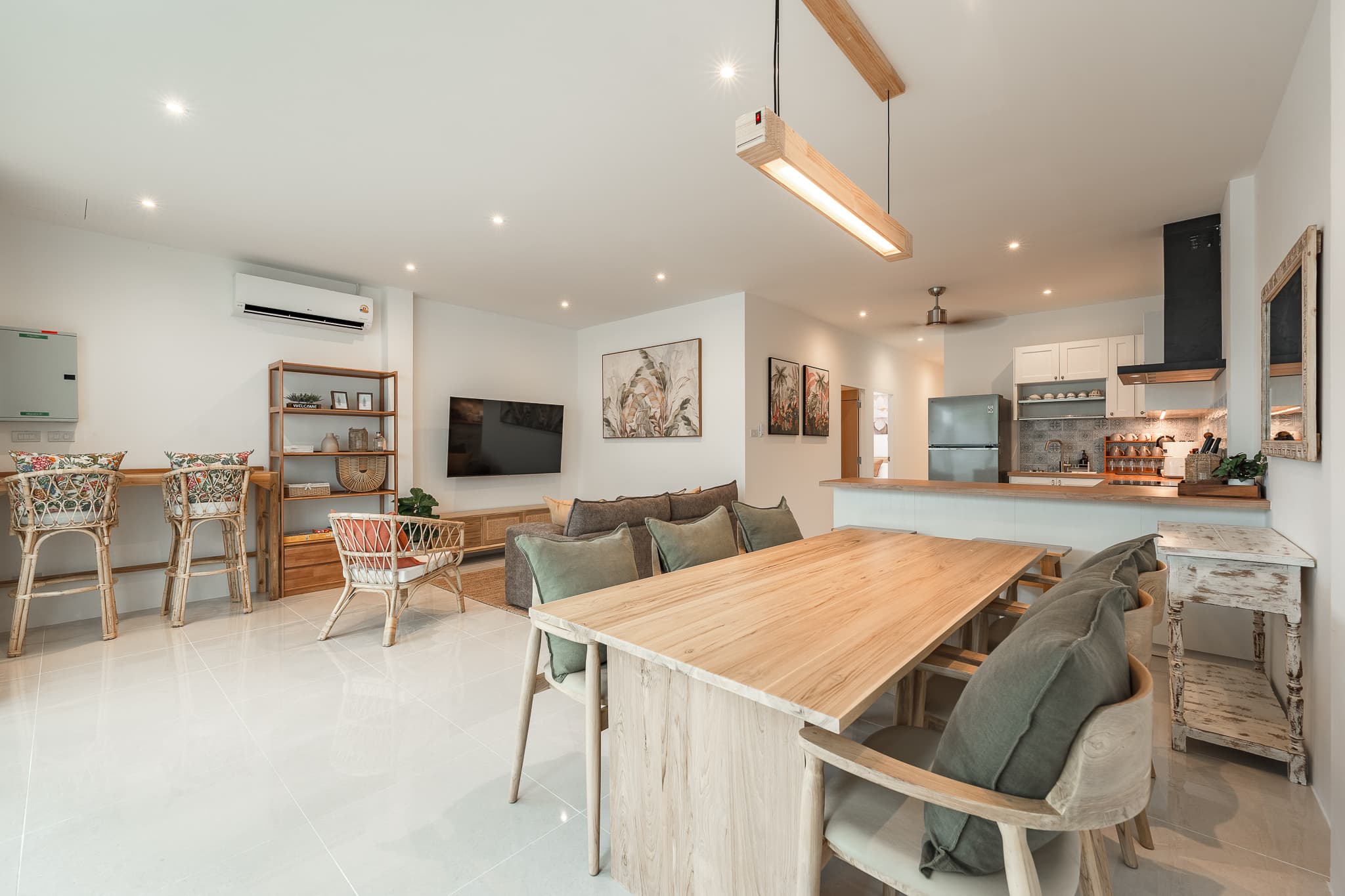
Maintenance and housekeeping
Villa maintenance and housekeeping in Phuket
Every owner asks the same thing: is the house actually being looked after, or only visited. The honest answer is a schedule of what gets done, how often, and who checked it.
The standing programme
What a villa here actually needs, and how often.
Not a checklist written in an office. This is the rhythm a working villa runs on here, with the frequencies most brochures round down.
The pool, which is most of the work
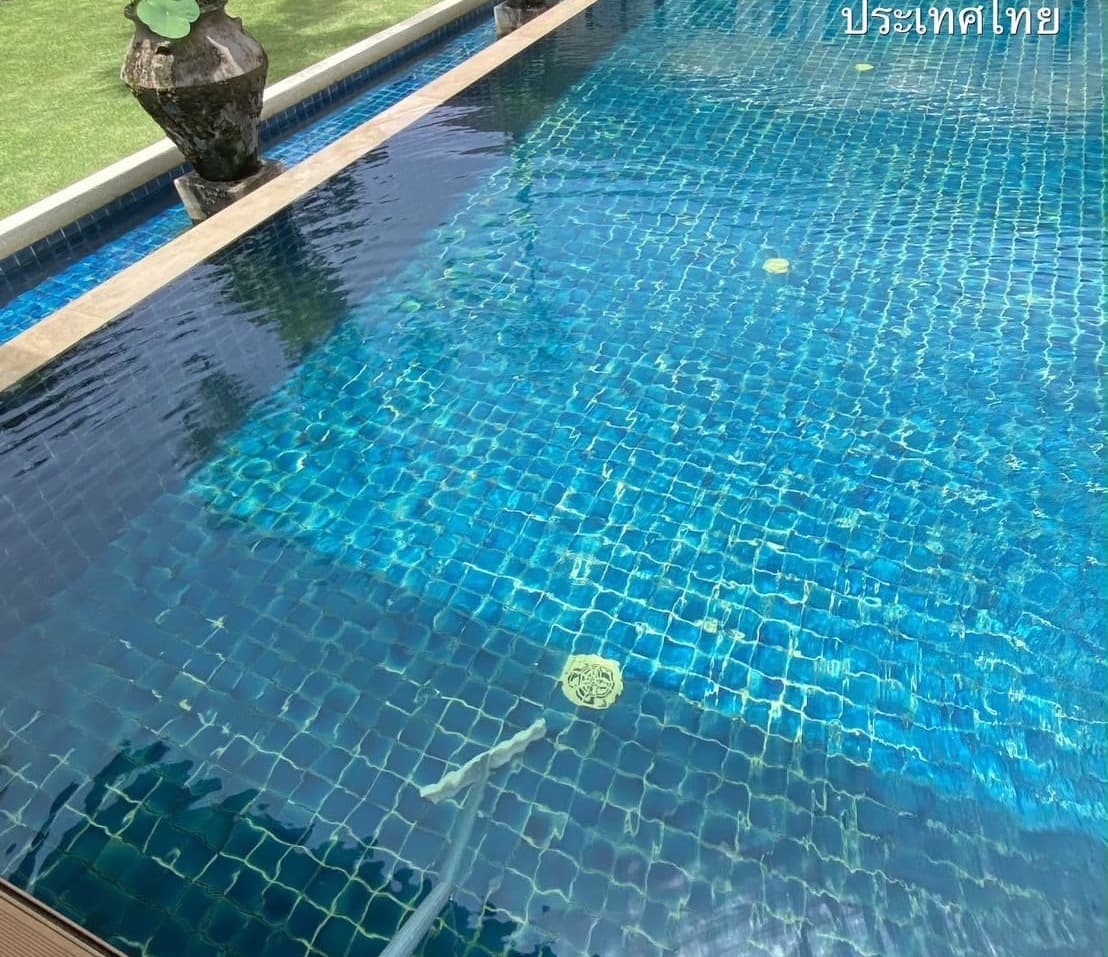
Sun burns chlorine off fast, and one heavy afternoon of rain moves the reading within hours. Testing goes up in the wet season, not down. Then the rest: skimmers cleared of leaf fall, filter backwashed, salt cell descaled, waterline scrubbed before it stains. A pool left a week in August turns green, and green takes days to undo.
Air conditioning, at the real frequency
Filters in a villa that rents want washing every few weeks, not twice a year. The failure owners never expect is the condensate drain: dust and algae block it, water backs up, and it arrives as a stain on a bedroom ceiling rather than an aircon fault. A unit needing gas every year has a leak.
A garden that grows while you watch
From May to October the lawn wants cutting weekly and the hedges shaping monthly, or the garden stops reading as maintained and starts reading as abandoned, which guests photograph. Dead fronds and coconuts over a pool deck are a safety job, not a tidiness one. By February it inverts: water it, or lose planting that took years.
Pests, before a guest meets one
Termites here work from underneath and from inside, through door frames and skirting, and nothing shows until something gives. That is why treatment is a standing arrangement, not a reaction. Ants find any kitchen eventually. Mosquitoes breed in plant saucers, gutters and anything holding rainwater, so the real control is someone walking the grounds after rain.
Housekeeping
Cleaning between guests is not the same job as cleaning the villa.
A turnaround keeps a villa presentable. A deep clean keeps it worth what you paid. Properties that decline are getting one and not the other.
The turnaround
A few hours between checkout and check-in, worked against a written checklist and photographed at the end, so the work is a record rather than a claim. Beds, bathrooms, floors, glass, pool furniture, the fridge emptied. It is also the inspection: the cleaner finds the cracked glass and the towel that never came back.
The deep clean
Every few months the villa comes off the calendar for a day. Furniture moves. Wardrobe backs and the wall behind them, extractor filters, shower silicone, grout, cushion covers, the underside of everything. Humidity works on the surfaces nobody looks at, and a villa that only ever gets turnarounds develops a smell before it develops a problem.
Linen wears out faster than you think
Sun cream and mosquito repellent mark white cotton, and the stain rarely washes out. Linen and towels in a rented villa wear through sooner than owners budget for. The answer is par levels (enough sets per bed that a changeover never waits on a laundry) and replacement planned, not discovered on the morning of an arrival.
Inventory, counted rather than assumed
Wine glasses, teaspoons, pool towels, remote controls, the beach umbrella. These go gradually, and nobody notices until a guest wants a sixth wine glass at eight in the evening. Counted at the deep clean, photographed, replaced quietly. It sounds trivial. It is most of the difference between a villa that reads as looked-after and one that reads tired.

Contractors and repairs
The cheapest quote on the island is usually the dearest one.
Half of maintaining a villa here is knowing which technician to call. The other half is checking what they did before anyone is paid.
How a contractor earns a place on the list
Three tests, all boring. They answer the phone on a Sunday. They put a scope in writing before the work, not a number after it. They come back for warranty work without an argument. Price is the fourth test, not the first. A tradesman who fails the first three eventually costs you a guest, and a guest is not recoverable.
Why the low quote costs more
A cheap quote is usually cheap because something was left out: the cause, not the symptom. Silicone over a failing seal instead of replacing it. A regas instead of finding the leak. A pump one size wrong because that is what was in the van. You pay again inside a year, usually in high season.
What breaks, and what it costs in time
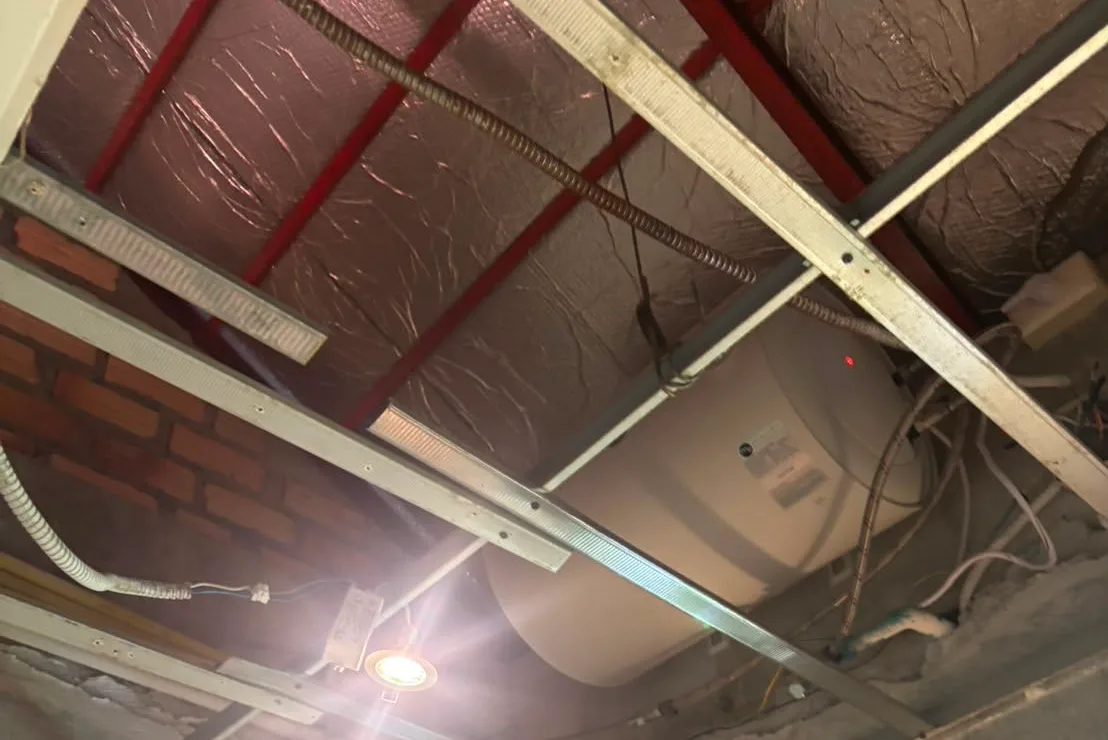
Pool pumps, aircon capacitors, gate motors after a power cut, generators nobody has run since the last one, fittings corroding in salt air. Parts often have to come from Bangkok: days rather than hours, longer over a public holiday. And the drive is never the drive you planned for. The number that matters is not the repair bill but the hours your guest spent without air conditioning.
Being fair about it
Where a large company beats us, and where it does not.
We look after few properties on purpose. There are owners for whom that is the wrong answer, and we would rather say so now.
A large operation carries a bench
Someone is always free, including the week our people are on leave and the day three properties fail at once. If you own several properties spread from Mai Khao to Rawai, that depth is worth more to you than familiarity, and a boutique manager who tells you otherwise is selling.
A small one gives you the same people
The person who cleaned your villa last month cleans it this month, and notices the tap that drips now and did not then. Nobody re-learns your house. The cost is real: when that person leaves you feel it, where a large company absorbs it. Our reviews suggest the trade is worth making (5.0 across 48 of them).
We are not a construction company
Routine repairs, replacements and the trades that keep a villa running are our work. A full refurbishment, a structural problem or a pool rebuilt from the shell is a project, and it wants a project manager and a proper contract. We will say so, help you find one, and keep the villa running around the works.
Straight answers
What owners ask us about maintenance and cleaning.
How often should a villa pool in Phuket be serviced?
How often does air conditioning need servicing in Phuket?
What is the difference between a turnaround clean and a deep clean?
How often does a villa need treating for termites?
Who pays for maintenance and repairs?
My villa is empty most of the year. Is this the same job?
Reviewed . We update these pages when the practice on the ground changes, not on a schedule.
Also worth reading
Our services
- Villa management in Phuket
- Condo management in Phuket
- Airbnb management in Phuket
- All property management services
- Villa care for absentee owners in Phuket
- Rent out my villa in Phuket
- A second opinion on how your villa is being managed
- Villa maintenance and housekeeping in Phuket
- Home property management in Phuket
- About Phuket Property Manager
- Contact a property management company in Phuket
Guides for owners
- Employing villa staff in Phuket
- Off-plan villa handover in Phuket: the snagging inspection
- How to choose a property management company in Phuket
- Self-managing versus hiring a property manager in Phuket
- Short-term rental rules in Phuket: the 30-day question
- Your rental guarantee is ending. What now?
- Switching property manager in Phuket
- Property management fees in Phuket
- The true cost of running a villa in Phuket
- Property management in Phuket for foreign owners
- Mould and humidity in an empty villa in Phuket
- Water in a Phuket villa: the tank, the pump and the day it runs dry
- Salt corrosion in a coastal villa in Phuket
- Villa air conditioning in Phuket: servicing, faults and who pays
- Villa pool maintenance in the Phuket rainy season
Areas we cover
Residences we already work in
- Anchan Villas: property management for owners
- Botanica villas: property management for owners
- Ayara Surin: property management for villa owners
- Wallaya villas: property management for owners
- Laguna Park: property management for owners
- Two Villas Tara: property management for owners
- The Ozone Residences: property management for owners
- Aristo 2 condo, Surin: Phuket Property Management
- The Regent: Phuket Property Management
Talk to the person who would look after your property.
No call centre, no sales team. We keep the portfolio small on purpose.